
Introduction
In many UK accounting firms, audit delays are often blamed on workload, deadlines, or client complexity.
But as we explored earlier, the real issue runs deeper.
The biggest bottleneck in audit workflows is working papers.
They sit at the centre of every audit yet they are also where the most audit inefficiencies occur.
So the real question is:
What exactly is slowing down working papers and how are modern firms solving it?
If you need the basics first, our guide to working papers in accounting explains what belongs in the file, and why traditional working papers are no longer enough covers what has changed.
Why Working Papers Become a Bottleneck
Working papers are meant to support clarity, structure, and compliance.
But in reality, they often become:
- Disorganised
- Time-consuming
- Difficult to review
- Hard to standardise
This is not because teams lack expertise, it’s because the system around working papers is broken.
The 5 Core Reasons Working Papers Slow Down Audits

- Disconnected Tools and Files
In many firms, working papers live across:
- Excel spreadsheets
- Word documents
- Shared drives
- Email threads
This creates:
- Constant switching between tools
- Lost context
- Time wasted searching for information
Instead of a single workflow, teams deal with fragmentation.
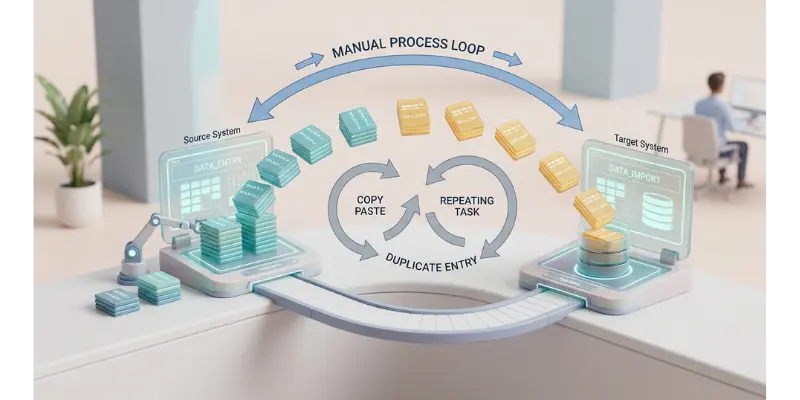
- Manual Data Handling
A large part of working papers still depends on:
- Copy-pasting data
- Manual updates
- Re-entering figures
This leads to:
- Higher risk of errors
- Repetitive work
- Significant time loss
Even small inefficiencies, repeated across audits, create major delays.
- Lack of Real-Time Collaboration
Audit teams rarely work in isolation but their tools often do.
Common challenges include:
- Multiple versions of the same file
- Overwritten changes
- Delayed updates between team members
Collaboration becomes reactive instead of seamless.
- Inefficient Review Workflows
Review is where working papers slow down the most.
Typical issues:
- Comments scattered across emails
- No clear review trail
- Difficulty tracking changes
This results in:
- Rework
- Confusion
- Delayed approvals
- No Standardised Structure
Different team members often structure working papers differently.
This leads to:
- Inconsistent documentation
- Slower reviews
- Increased training time for new staff
Lack of standardisation = lack of efficiency.
The Compounding Effect
Each of these issues may seem small individually.
But together, they create:
- Longer audit cycles
- Increased operational cost
- Frustrated teams
- Reduced capacity for firms
This is why simply “working harder” doesn’t solve the problem.
Keeping every review point, query and sign-off in one place inside the file removes the email trail altogether.
How Modern Accounting Firms Are Fixing This
Forward-thinking UK firms are not just improving workflows, they are rebuilding them from the ground up.
Here’s what’s changing:
✔️ Centralised Working Paper Systems
Instead of scattered files, everything lives in one place:
- Structured documentation
- Easy navigation
- Complete audit trail
✔️ Automated Data Flow
Manual data handling is being reduced through:
- Integrated data inputs
- Automated updates
- Reduced duplication
✔️ Real-Time Collaboration
Teams can now:
- Work on the same data simultaneously
- Track changes instantly
- Avoid version conflicts
✔️ Structured Review Processes
Modern workflows introduce:
- Clear review stages
- Centralised comments
- Transparent audit trails
✔️ Standardised Templates and Workflows
Firms are adopting:
- Consistent working paper formats
- Predefined structures
- Repeatable processes
Where Technology Fits In
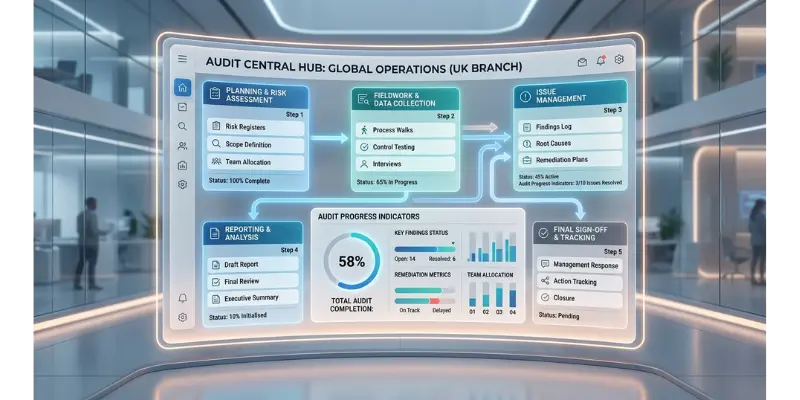
This shift is not just about better discipline and it is also enabled by better tools.
Modern working paper platforms are designed to:
- Eliminate fragmentation
- Improve visibility
- Streamline collaboration
- Reduce manual effort
Instead of forcing teams to adapt to tools like spreadsheets, these systems are built specifically for audit workflows.
The same bottlenecks slow down the accounts file for non-audit clients, and that is where AI working papers go a step further: the system raises review points itself, so the reviewer starts with a list of what looks wrong instead of reading every schedule. See how AI accounts review works.
A Practical Shift – Not Just a Trend
Many small and mid-sized UK accounting firms are already:
- Moving away from spreadsheet-heavy processes
- Adopting structured working paper systems
- Reducing audit turnaround time
- Increasing team efficiency without increasing headcount
This is not about replacing accountants, it’s about removing the friction around their work.
Conclusion
Working papers should support audits and not slow them down.
But in many firms, outdated processes and disconnected tools have turned them into a major bottleneck.
The firms that are solving this are not doing more work, they are doing smarter work with better systems.
And as audit demands continue to increase, this shift will move from advantage to necessity.
About the author
Written by the Papercare Team. Papercare is the AI accountant for UK accountancy practices: AI accounting software that imports the client’s data, builds AI working papers that tie, and raises review points before the partner opens the file. It was built inside a live UK practice by founder Shrineel Patel FCCA. More about Papercare