
Introduction
The relationship between accountants and their clients has evolved significantly in recent years. What clients expect from their accountants today is very different from what they expected even five or ten years ago.
Traditionally, accounting firms were seen primarily as compliance providers. Their role was to ensure that financial records were accurate, deadlines were met, and regulatory requirements were fulfilled. While these responsibilities remain important, they are no longer enough to meet modern expectations.
Clients today are more informed, more demanding, and more focused on value. They expect faster responses, clearer insights, and more proactive support. This shift is not limited to large firms or complex clients, it is happening across the entire UK accounting landscape and as a result, clients are looking for high performing accounting firms today in UK.
Understanding why these expectations are changing is essential for firms that want to remain competitive and relevant.
The Shift from Compliance to Value

For many years, compliance work formed the core of accounting services. Clients relied on their accountants to handle statutory requirements, and the relationship was largely transactional.
Today, this model is evolving. Clients are increasingly looking for value beyond compliance. They want insights that help them make better decisions, improve performance, and plan for the future.
This does not mean compliance is becoming less important. Rather, it is becoming the baseline expectation. What differentiates firms now is their ability to go beyond it.
High-performing firms recognise this shift and are adapting their services accordingly.
Increased Access to Information
One of the key drivers of changing expectations is access to information.
With the rise of digital tools and platforms, clients now have greater visibility into their financial data. They are no longer entirely dependent on their accountants to access or understand this information.
As a result, clients are asking more informed questions. They expect their accountants to provide deeper insights rather than simply presenting data.
This shift requires firms to move from being information providers to being advisors.
Demand for Speed and Responsiveness

In today’s fast-paced business environment, speed matters. Clients expect:
- Faster turnaround times
- Quick responses to queries
- Real-time updates on progress
Delays that may have been acceptable in the past are now seen as inefficiencies.
This expectation is influenced by experiences in other industries, where instant access and rapid responses have become the norm. Accounting firms are now expected to match this level of responsiveness.
The Expectation of Transparency

Transparency has become a key factor in client relationships. Clients want to understand:
- What work is being done
- How it is being done
- When it will be completed
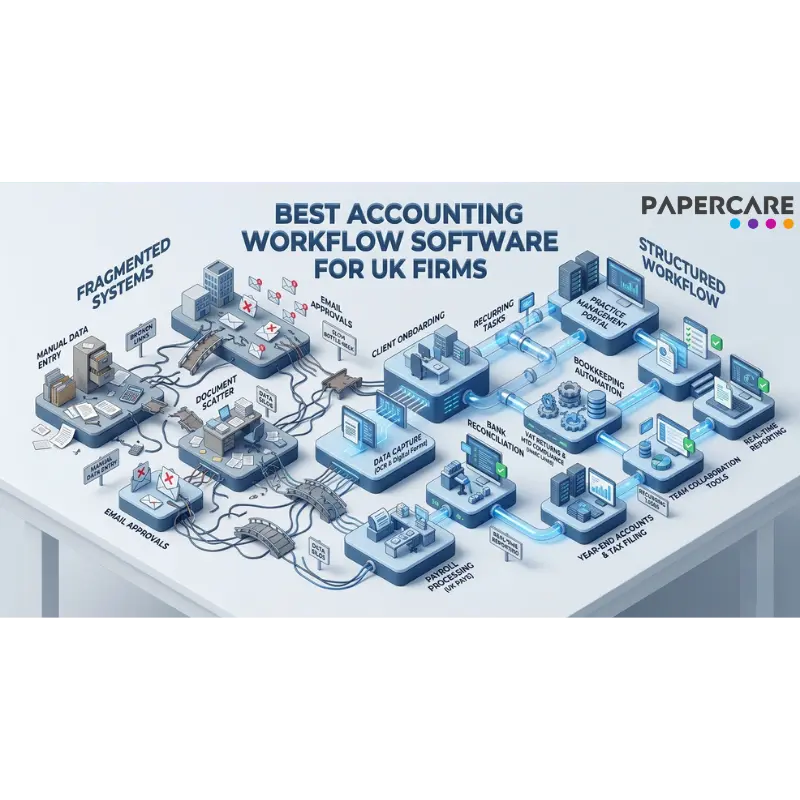
Traditional workflows often lack this level of visibility, leading to uncertainty and frustration. Modern systems that provide real-time updates and clear tracking are helping firms meet this expectation.
Technology Is Shaping Client Perception
Clients are increasingly influenced by the technology they use in other areas of their business.
When they experience efficient, user-friendly systems elsewhere, they expect similar experiences from their accountants.
Firms that rely on outdated processes often struggle to scale and meet these expectations. On the other hand, those that adopt modern systems can provide a more seamless and professional experience.
The Rise of Advisory Relationships

As expectations shift, the role of the accountant is becoming more advisory. Clients are looking for guidance on:
- Business decisions
- Financial planning
- Growth strategies
This requires accountants to develop new skills and adopt tools that support deeper analysis and insight generation. Firms that successfully transition to this model can build stronger, more valuable client relationships.
Challenges for Accounting Firms

While the shift in expectations creates opportunities, it also presents challenges facing UK accounting firms. Firms must balance:
- Increasing workload
- Resource constraints
- The need for efficiency
Without the right systems and processes, meeting higher expectations can lead to increased pressure on teams. This makes it essential for firms to rethink how they operate.
Adapting to Changing Expectations

To meet modern client expectations, firms need to adapt in several key areas. This includes:
- Improving workflows
- Investing in technology
- Enhancing communication
- Developing advisory capabilities
Adaptation is not a one-time change but an ongoing process. Firms that continuously improve are better positioned to succeed.
The Role of Systems and Workflows
Behind every high-performing firm is a strong operational system. Efficient workflows and structured systems enable firms to:
- Deliver work faster
- Maintain consistency
- Provide better visibility
This directly impacts the client experience. When systems are well-designed, teams can focus more on delivering value rather than managing processes.
Looking Ahead

Client expectations will continue to evolve as technology advances and business environments change.
Firms that stay ahead of these changes will be better positioned to build long-term relationships and maintain a competitive edge.
The key is to recognise that expectations are not static. They will continue to rise, and firms must be prepared to evolve alongside them.
Conclusion
The expectations of clients in the UK accounting industry are changing rapidly. From faster responses to deeper insights and greater transparency, the demands placed on firms are higher than ever.
While this creates challenges, it also presents an opportunity for firms to differentiate themselves and deliver greater value. Those that understand and adapt to these changes will be better equipped to succeed in an increasingly competitive environment.