
Introduction
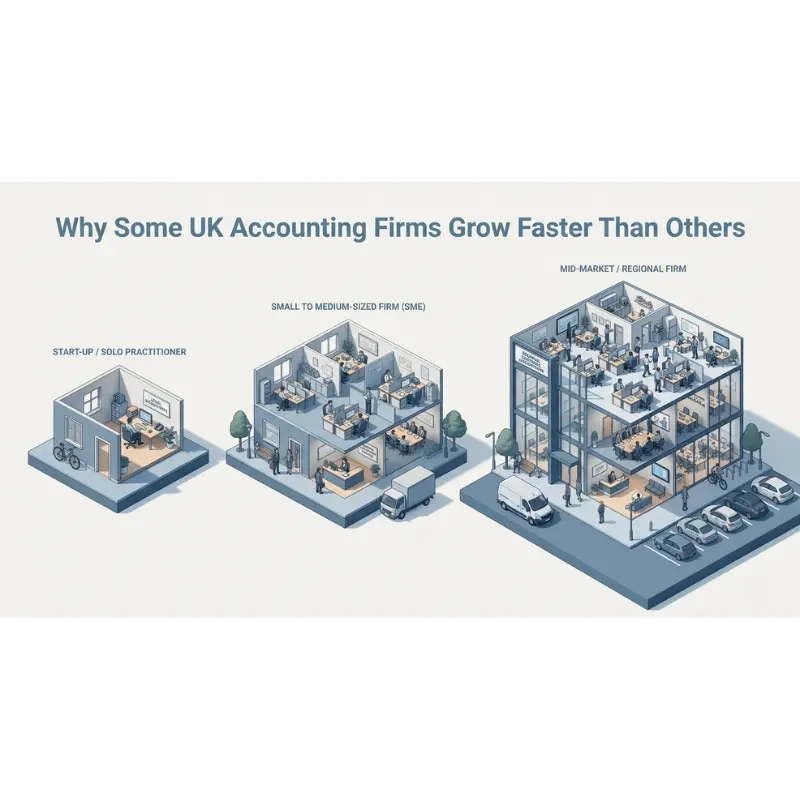
Growth is the goal for most accounting firms. More clients, more revenue, stronger reputation. But for many small and mid-sized UK accounting firms, growth doesn’t feel like progress. Instead, it feels like:
- More pressure
- More complexity
- More operational strain
The reality is: Scaling an accounting firm is not just about getting more clients, it’s about handling them efficiently. And this is where many firms struggle.
The Scaling Problem Most Firms Don’t Expect

At the early stage, growth is manageable.
- Fewer clients
- Simpler workflows
- Direct oversight
But as the firm grows:
- Workloads increase
- Processes become more complex
- Coordination becomes harder
What worked before starts breaking down.
The 6 Key Challenges Limiting Growth

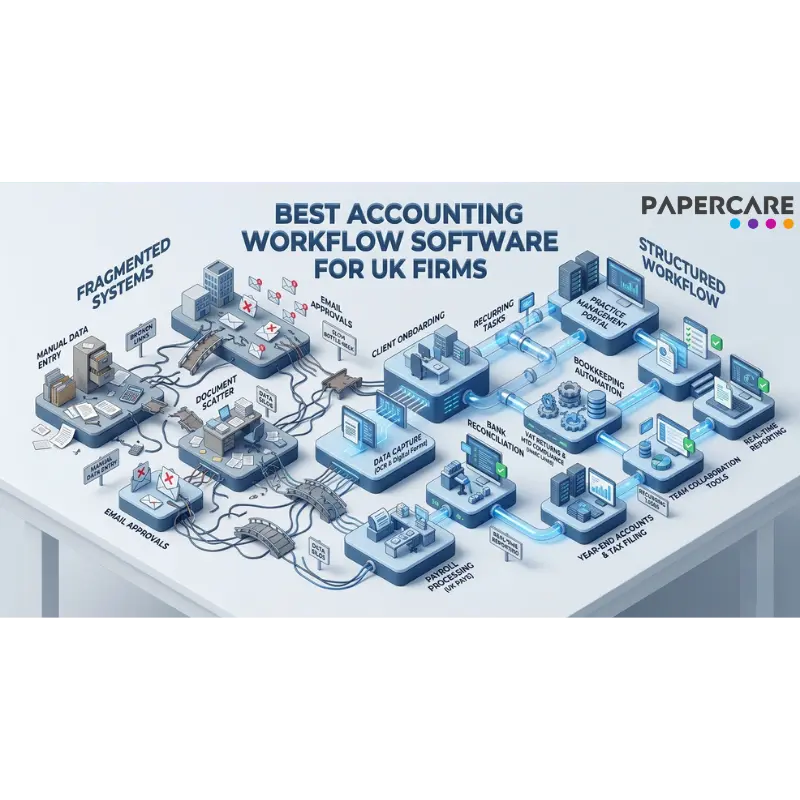
- Over-Reliance on Manual Processes
Many small firms depend heavily on:
- Spreadsheets
- Manual data entry
- Ad-hoc workflows
This creates:
- Time bottlenecks
- Increased risk of errors
- Limited capacity to take on more work
Growth becomes constrained by how much manual work the team can handle.
- Lack of Standardised Workflows
In smaller teams, processes often evolve informally. Different team members:
- Work in different ways
- Structure files differently
- Follow inconsistent processes
This leads to:
- Audit Inefficiencies
- Longer onboarding for new staff
- Slower reviews
- Limited Team Capacity
Hiring more staff seems like the obvious solution. But it comes with:
- Increased costs
- Training time
- Management overhead
Without efficient systems, adding people doesn’t always solve the problem.
- Inefficient Review Processes
As client volume grows, review stages become a major bottleneck. Common issues include:
- Delayed approvals
- Back-and-forth communication
- Lack of visibility into progress
This slows down delivery and affects client timelines.
- Poor Visibility Across Workflows
Many firm owners and managers struggle to answer:
- What stage is each client at?
- Where are the delays?
- Who is overloaded?
Without clear visibility, decision-making becomes reactive.
- Technology That Doesn’t Scale
Tools that work for a small firm often don’t scale well. For example:
- Spreadsheets become harder to manage
- File systems become cluttered
- Collaboration becomes inefficient
The firm outgrows its own systems.
The Hidden Impact of These Challenges

These issues don’t just slow growth, they change how the firm operates.
🔻 Growth Plateaus
Firms stop taking on new clients despite demand
🔻 Profit Margins Drop
More time spent per client reduces profitability
🔻 Team Burnout Increases
Staff spend more time on repetitive, manual work
🔻 Client Experience Suffers
Delays and inefficiencies affect delivery quality
Why Many Firms Stay Stuck
Even when these challenges are clear, many firms don’t address them. Why?
- “This is how we’ve always worked”
- Fear of changing systems
- Underestimating inefficiencies
- Lack of clarity on better alternatives
The result: Firms adapt to inefficiency instead of fixing it.
What Scalable Firms Do Differently
Firms that successfully scale don’t just work harder, they change how work is structured.
They focus on:
✔️ Reducing Manual Dependency
Less repetitive work, more structured processes
✔️ Standardising Workflows
Consistency across clients and team members
✔️ Improving Collaboration
Better coordination without confusion
✔️ Increasing Visibility
Clear understanding of progress and bottlenecks
✔️ Using Systems That Scale
Tools designed to grow with the firm
Conclusion
Scaling an accounting firm is not just a growth challenge, it’s an operational one. The firms that struggle are not lacking demand. They are limited by:
- Manual processes
- Lack of structure
- Inefficient systems
The firms that succeed are those that fix these early. Because in today’s environment:
Efficiency is what enables growth and not just effort.