
Introduction
Artificial intelligence is no longer a future concept in accounting. It is already being used by firms across the UK to improve workflows, reduce manual effort, and enhance decision-making. Yet for many accountants, AI still feels unclear.
There is a gap between what AI promises and what it actually does inside accounting software.
Most explanations remain high-level. They talk about automation, efficiency, and insights, but rarely explain how these systems function in real workflows. As a result, firms often struggle to evaluate whether AI is genuinely useful or simply another layer of complexity.
To understand its true value, it is important to move beyond theory and look at how AI operates in practice particularly within modern working papers and accounting systems.
AI in Accounting Software: Moving Beyond the Buzzword
In accounting software, AI is not a single feature or tool. It is a set of capabilities integrated into workflows to assist with specific tasks.
Unlike traditional automation, which follows fixed rules, AI systems can interpret data, recognise patterns, and generate outputs dynamically. This allows them to handle tasks that previously required manual judgement or significant time investment.
For example, instead of manually searching through documents for relevant information, AI can analyse uploaded files and extract insights instantly. Instead of drafting communications from scratch, it can generate structured, context-aware responses.
This shift changes the role of software from being a passive tool to an active participant in the workflow.
The Foundation: Why Structure Matters More Than AI

One of the most important and often overlooked aspects of AI in accounting is that it depends entirely on structure. AI systems require:
- Consistent data
- Organised workflows
- Centralised information
Without these elements, their effectiveness is limited.
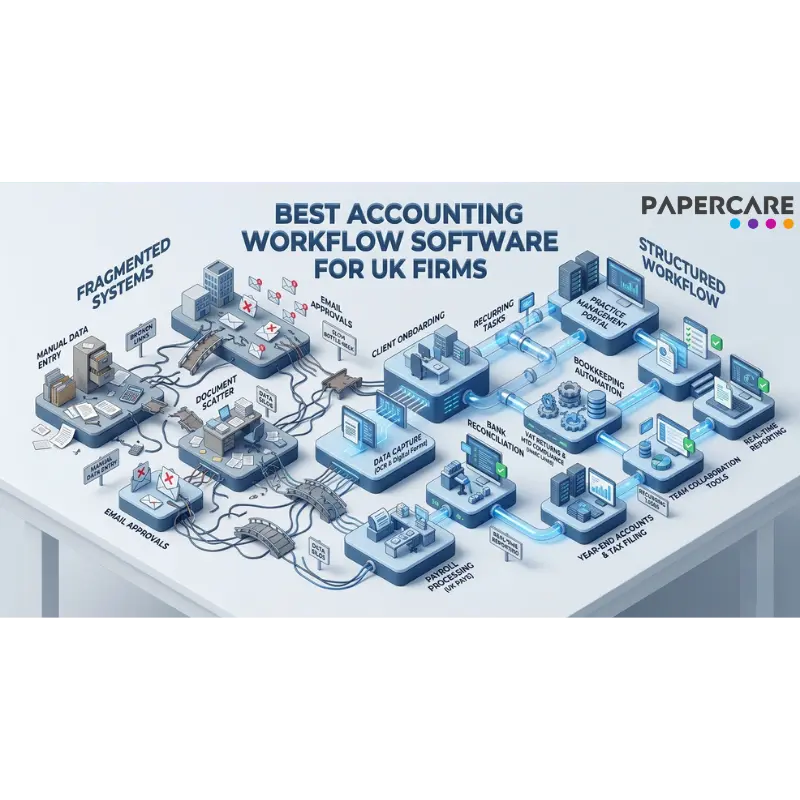
This is why traditional spreadsheet-based environments struggle to benefit from AI. When data is scattered across files, inconsistently formatted, and disconnected from workflows, AI cannot interpret it reliably.
Modern platforms like Papercare address this by creating structured environments where working papers, data, and processes are centralised. This allows AI to operate with clarity and deliver meaningful outputs.
In simple terms: AI is only as powerful as the system it operates within.
How AI Actually Works Inside Accounting Workflows

To understand how AI works in accounting software, it helps to break it down into functional layers. At its core, AI systems in platforms like Papercare operate through:
- Input Layer
Data enters the system through:
- Financial records
- Working papers
- Uploaded documents (PDFs, Excel, etc.)
- User queries
- Processing Layer
AI models analyse this data by:
- Identifying patterns
- Understanding context
- Connecting related information
These systems often use large language models and machine learning techniques to generate outputs based on both data and prompts.
- Output Layer
The system delivers:
- Answers
- Insights
- Draft documents
- Data summaries
This entire process happens in seconds, replacing tasks that previously required manual effort.
Real AI Capabilities Inside Papercare

To make this more practical, it is useful to look at how AI is implemented within a real system. Papercare integrates AI across multiple modules that directly support accounting workflows.
AI-Powered Assistant for Accounting Queries
Papercare includes a secured AI assistant that allows accountants to ask questions related to accounting, finance, and tax. Instead of searching through multiple resources, users can:
- Analyse financial data
- Interpret reports
- Research technical topics
The system processes queries and delivers structured answers instantly, acting as an always-available support tool.
Chat with Database: Direct Data Access
One of the most powerful applications of AI is its ability to interact directly with financial data. With “chat with database” functionality, users can:
- Retrieve profit and loss data
- Analyse balance sheets
- Review journal entries
All through simple queries. This removes the need to navigate multiple screens or reports and transforms how data is accessed within workflows.
My Intelligence: Firm-Specific Knowledge
AI becomes significantly more valuable when it understands firm-specific context. Papercare allows users to upload:
- Standards
- Internal guidance
- Reference materials
The AI then uses this knowledge to provide tailored responses, reducing the need to repeatedly search through documents.
My Library: Automated Drafting
Drafting emails and client communications is a repetitive but essential task. Papercare’s AI automates this by:
- Generating structured drafts
- Maintaining consistency
- Adapting tone and context
This reduces time spent on communication while improving quality.
My Tax Expert: Specialised AI for UK Tax
Tax queries often require referencing multiple sources and interpreting complex rules. Papercare’s tax-focused AI assistant:
- Uses trusted UK sources
- Generates accurate responses
- Produces client-ready outputs
This makes tax research faster and more reliable.
How AI Reduces Manual Work in Accounting Firms
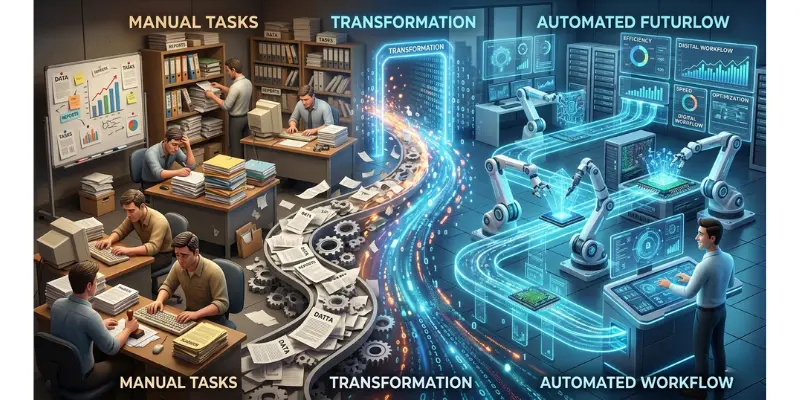
In traditional accounting workflows, a large portion of time is spent on repetitive tasks. These include:
- Data entry
- Reconciliation
- Document review
- Drafting communications
AI reduces this burden by handling these activities automatically. For example, instead of manually reviewing multiple documents, AI can analyse them and highlight key information. Instead of preparing drafts from scratch, it generates them based on structured inputs.
This does not eliminate the role of accountants. Instead, it shifts their focus towards reviewing, interpreting, and advising.
Improving Accuracy and Consistency with AI
Manual processes are inherently prone to errors. Even small inconsistencies can lead to significant issues in accounting workflows. AI improves accuracy by:
- Applying consistent logic
- Reducing manual intervention
- Identifying anomalies
It can also flag unusual patterns or discrepancies, allowing firms to address issues earlier in the process. This creates a more reliable workflow where outputs are consistent across engagements.
AI and Workflow Visibility: A Major Shift

One of the biggest challenges in accounting firms is visibility. Teams often lack:
- Real-time progress tracking
- Clear identification of bottlenecks
- Centralised oversight
AI-enabled systems solve this by providing:
- Instant updates
- Workflow insights
- Data-driven visibility
This allows firms to move from reactive management to proactive decision-making.
Why AI Alone Is Not Enough

A common mistake is assuming that adopting AI alone will solve workflow problems.
In reality: AI amplifies existing systems
If workflows are inefficient, AI will not fix them. It may even highlight those inefficiencies more clearly. This is why successful firms focus on:
- Structuring workflows first
- Then applying AI
Platforms like Papercare combine both elements, ensuring that AI operates within a system designed for efficiency.
The Future of AI in Accounting Software
AI in accounting is still evolving, and its capabilities will continue to expand. Future developments may include:
- Predictive insights
- Advanced anomaly detection
- Deeper integration across systems
However, the direction is already clear. AI is not replacing accountants. It is transforming how they work.
Conclusion
AI in accounting software is often misunderstood because it is explained in abstract terms. In reality, it is highly practical. It works by:
- Processing data
- Automating repetitive tasks
- Enhancing workflows
- Supporting decision-making
Platforms like Papercare demonstrate how AI can be integrated directly into working papers and accounting systems, creating real, measurable improvements in efficiency and accuracy. For UK accounting firms, the question is no longer whether AI will be relevant. It is whether they understand how to use it effectively.