
Introduction
Artificial intelligence has become one of the most talked-about topics in the accounting industry. From industry events to webinars and LinkedIn discussions, the conversation around AI is everywhere. It is often positioned as the next major shift that will redefine how accounting firms operate.
But behind all the discussion, an important question remains: are UK accounting firms actually ready to adopt AI in a meaningful way, or is the industry still in a phase of observation and experimentation?
The distinction matters. Talking about AI and implementing AI are two very different things. While awareness is growing rapidly, adoption requires structural, operational, and cultural readiness something many firms are still working towards.
The Growing Conversation Around AI in Accounting

Over the past few years, AI has shifted from being a niche topic to a central theme in the accounting profession. Industry bodies, software providers, and thought leaders are increasingly highlighting its potential to improve efficiency, reduce manual work, and enhance decision-making.
This growing attention is not without reason. The pressure on accounting firms is increasing. Regulatory requirements are becoming more demanding, client expectations are evolving, and competition is intensifying. In this context, AI is often presented as a solution that can help firms do more with less.
However, the widespread discussion has also created a gap between perception and reality. While many firms understand the potential of AI, far fewer have fully integrated it into their day-to-day workflows.
What “Being Ready for AI” Actually Means
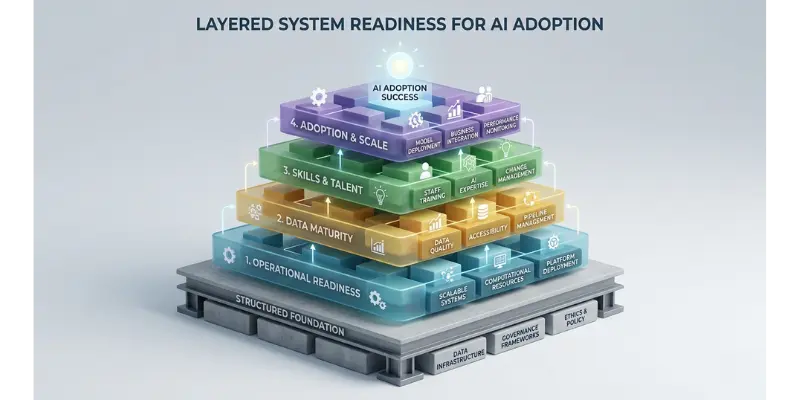
Readiness for AI is often misunderstood as simply having access to AI tools. In reality, it goes much deeper than that.
For AI to deliver meaningful value, firms need a strong operational foundation. This includes structured workflows, consistent data, and clearly defined processes. Without these elements, even the most advanced AI tools struggle to produce reliable outcomes.
Readiness also involves cultural alignment. Teams need to be open to change and willing to adapt how they work. AI adoption often requires a shift away from manual processes towards more system-driven workflows, which can be challenging for firms that are used to traditional approaches.
In essence, being ready for AI means having the right combination of systems, processes, and mindset.
The Gap Between AI Awareness and Adoption
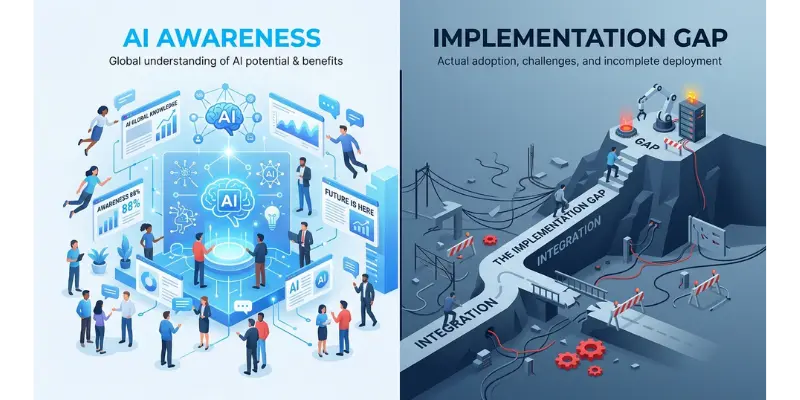
There is a noticeable gap between how much AI is discussed and how much it is actually used in practice. Many firms are exploring AI through:
- Webinars and training sessions
- Pilot tools or limited use cases
- Conversations with software providers
While these are important first steps, they do not necessarily translate into full adoption. In many cases, AI remains an add-on rather than being integrated into core workflows.
This gap often exists because firms are unsure where to start or how to implement AI effectively. Without a clear strategy, AI initiatives can remain fragmented and fail to deliver their full potential.
The Structural Challenges Holding Firms Back

Several structural challenges make AI adoption difficult for accounting firms.
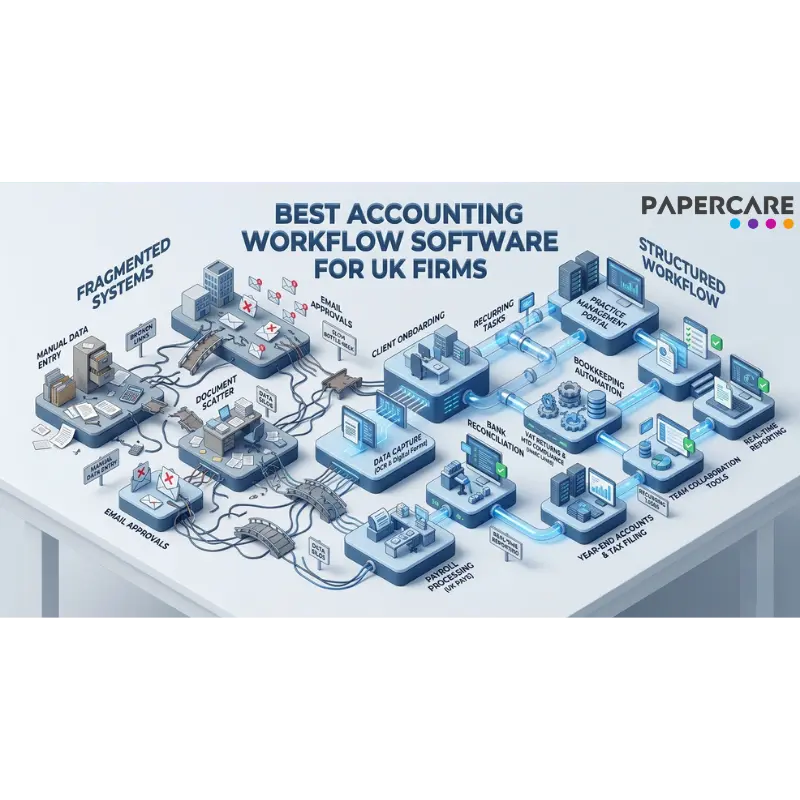
One of the most significant is the reliance on unstructured data. When information is stored across spreadsheets and disconnected systems, it becomes difficult for AI to process and analyse it effectively. Learn more about spreadsheet issues in accounting workflows
Another challenge is the lack of standardisation. Inconsistent workflows and documentation make it harder to apply AI solutions at scale. Each variation introduces complexity, reducing the effectiveness of automation.
Additionally, many firms are constrained by legacy systems that were not designed to support modern technologies. Integrating AI into these environments can be complex and resource-intensive.
These challenges highlight an important point: AI adoption is not just a technology upgrade, it is an operational transformation.
Where AI Is Already Delivering Value

Despite the challenges, AI is already delivering value in specific areas of accounting. Firms that have adopted AI successfully are using it to:
- Automate repetitive data-related tasks
- Improve accuracy in documentation
- Enhance data analysis and insights
- Reduce time spent on manual processes
These use cases demonstrate that how AI streamlines accounting workflows when applied correctly. However, they also show that the benefits are most visible when AI is integrated into structured workflows rather than used in isolation.
Why Workflow Structure Matters More Than AI Itself
One of the most overlooked aspects of AI adoption is the importance of workflow structure.
AI relies on consistency and clarity. When workflows are structured and data is organised, AI can operate effectively. When they are not, AI becomes limited in what it can achieve.
This is why many firms that invest in AI without addressing their underlying workflows see limited results. The technology is there, but the environment is not ready to support it.
In contrast, firms that focus on improving their processes first are better positioned to benefit from AI. They create a foundation that allows technology to deliver real value.
How UK Accounting Firms Can Move From Talk to Action

Moving from discussion to implementation requires a practical approach.
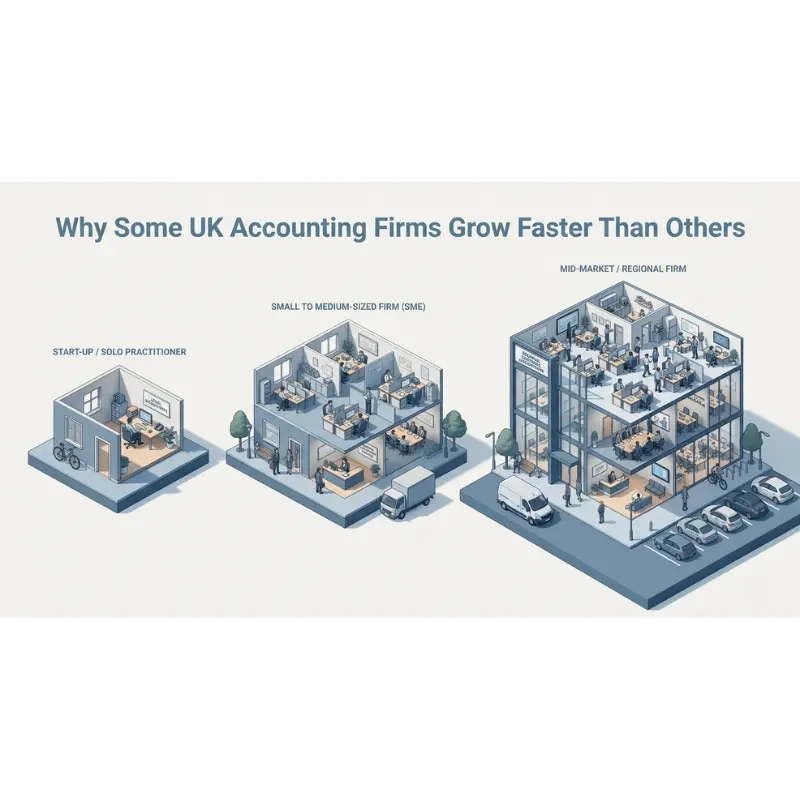
Firms need to start by evaluating their current workflows and identifying areas where inefficiencies exist which is usually the starting point why small accounting firms struggle to scale. This provides a clear starting point for improvement.
The next step is to introduce structure. Standardising processes and centralising documentation creates the foundation needed for automation and AI.
From there, firms can begin to integrate AI gradually, focusing on specific use cases where it can deliver immediate value. This reduces risk and allows teams to adapt over time.
Importantly, this is not about adopting AI for the sake of it. It is about using AI to solve real operational challenges.
The Role of Modern Systems in Enabling AI

Modern accounting systems play a crucial role in bridging the gap between AI potential and practical implementation.
Platforms like Papercare are designed with structured workflows and centralised working papers, which create an environment where AI can be applied effectively. By reducing fragmentation and improving consistency, these systems make it easier for firms to integrate automation and AI into their processes.
Rather than treating AI as a separate layer, they embed it within the workflow itself. This ensures that technology supports how work is done, rather than adding complexity.
Conclusion
The conversation around AI in UK accounting firms is growing rapidly, but adoption is still in its early stages.
Most firms are not lacking awareness, they are lacking readiness.
AI has the potential to transform accounting workflows, but only when it is supported by the right systems and processes. Without this foundation, its impact remains limited.
The firms that will benefit the most are those that move beyond discussion and focus on building the operational structure needed to support AI.
Because in the end, the question is not whether AI will shape the future of accounting.
It is whether firms are prepared to adapt in time to benefit from it.