Introduction
Growth in the UK accounting industry is often misunderstood.
Many firms assume that growth is simply a result of winning more clients. While client acquisition plays a role, it is rarely the defining factor. In reality, two firms operating in the same market, offering similar services, and targeting similar clients can experience very different growth trajectories.
Some firms scale steadily, increase profitability, and expand their teams with confidence. However, other firms faces challenges , despite consistent effort and demand.
This difference is not accidental. It is the result of how firms are structured, how they operate, and how they make decisions.
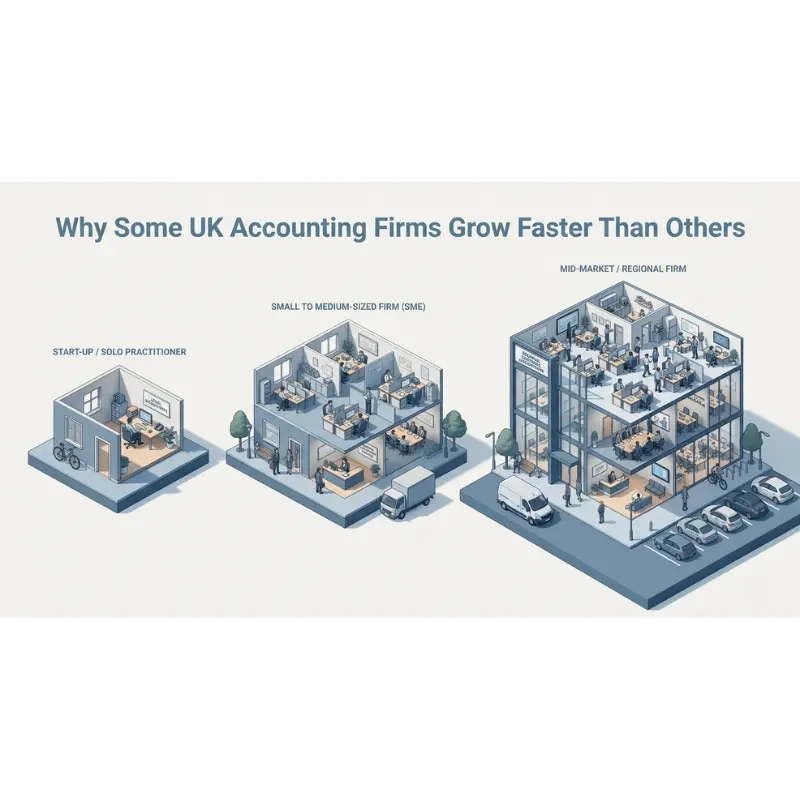
Understanding why some accounting firms grow faster than others requires looking beyond surface-level explanations and examining the underlying drivers of growth.
Growth Is Not Just About Winning More Clients

It is easy to assume that faster-growing firms are simply better at marketing or sales. While these areas are important, they are not the primary constraint for most firms.
In many cases, firms already have more demand than they can comfortably handle. The real limitation lies in their ability to deliver work efficiently.
When workflows are not optimised, taking on additional clients can lead to increased pressure rather than growth. Teams become overloaded, deadlines tighten, and service quality may decline.
As a result, growth becomes something firms hesitate to pursue, rather than something they actively drive.
Sustainable growth depends not just on acquiring clients, but on building the capacity to serve them effectively.
Operational Efficiency as a Growth Driver

One of the most consistent characteristics of high-growth accounting firms is operational efficiency.
Efficient firms are able to complete work faster, reduce rework, and maintain consistency across engagements. This allows them to handle a higher volume of work without proportionally increasing their workload.
In contrast, inefficient firms often spend significant time on repetitive tasks, manual processes, and correcting errors. This limits their capacity and slows down growth.
Efficiency is not achieved through shortcuts. It is built through structured workflows, clear processes, and the effective use of systems.
Over time, even small improvements in efficiency can have a significant impact on a firm’s ability to scale.
The Role of Standardisation

Standardisation plays a critical role in enabling growth.
In firms where processes are standardised, work is completed in a consistent manner regardless of who is performing it. This reduces variability and makes it easier to manage quality.
Standardisation also simplifies training and onboarding. New team members can quickly understand how work is done, which reduces the time required to become productive.
Without standardisation, firms rely heavily on individual knowledge and experience. While this can work in smaller teams, it becomes a limitation as the firm grows.
Firms that scale successfully tend to prioritise standardisation early, creating a strong foundation for future growth.
Delegation and Team Structure

Another key difference between faster-growing firms and those that grow more slowly is how work is delegated.
In many firms, senior accountants remain heavily involved in day-to-day tasks. While this ensures quality, it also creates a bottleneck.
As the firm grows, this model becomes unsustainable.
High-growth firms adopt a more structured approach to delegation. Work is distributed across the team based on defined roles and responsibilities. This allows senior team members to focus on higher-value activities, such as client relationships and strategic decisions.
Effective delegation requires trust, clear processes, and visibility into work. Without these elements, firms may struggle to move beyond a founder-led model.
Technology as an Enabler, Not a Solution

Technology plays an important role in growth, but its impact depends on how it is used.
Faster-growing firms tend to use technology to support their processes, rather than relying on it to solve problems. They focus on:
- Integrating systems
- Reducing manual work
- Improving visibility
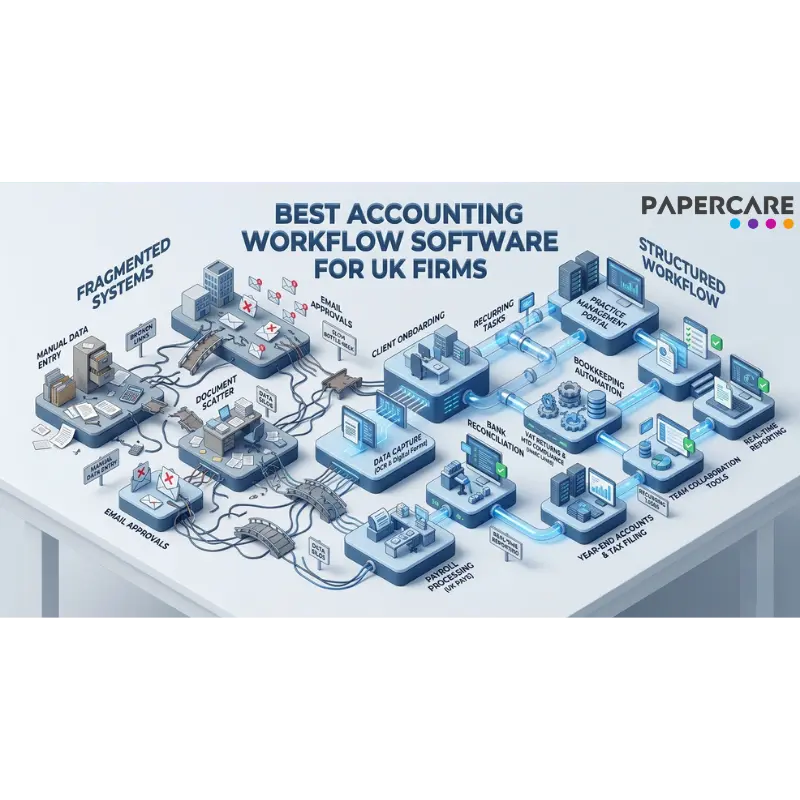
Slower-growing firms, on the other hand, may adopt multiple tools without a clear strategy. This can lead to fragmented workflows and reduced efficiency.
The difference lies in how technology is aligned with the firm’s overall approach.
When used effectively, technology can amplify efficiency and support growth. When used without structure, it can create additional complexity.
Visibility and Control

Growth requires visibility.
Firms need to understand what work is in progress, where bottlenecks are occurring, and how resources are being utilised.
Without this visibility, managing growth becomes reactive. Issues are identified late, and decisions are made based on incomplete information.
Faster-growing firms prioritise visibility. They have systems in place that provide a clear view of workflows and performance.
This allows them to make informed decisions, allocate resources effectively, and respond quickly to changes.
Client Experience and Retention

While operational factors are critical, client experience also plays a role in growth.
Firms that deliver consistent, high-quality service are more likely to retain clients and generate referrals. This creates a stable base for growth.
Efficiency contributes to client experience by enabling firms to:
- Deliver work on time
- Communicate clearly
- Provide insights beyond compliance
In this way, operational improvements and client satisfaction are closely linked.
The Compounding Effect of Small Improvements

Growth is rarely the result of a single change. Instead, it is the cumulative effect of multiple improvements over time. For example:
- A more efficient workflow reduces time per job
- Standardisation improves consistency
- Better delegation frees up senior capacity
Individually, these changes may seem incremental. However, together they create a significant impact on the firm’s ability to grow.
Faster-growing firms tend to focus on continuous improvement, rather than seeking quick fixes.
Challenges That Hold Firms Back
Understanding why some firms grow faster also requires recognising the challenges that hold others back.
These may include:
- Reliance on manual processes
- Lack of standardisation
- Limited visibility
- Difficulty in adopting new systems
Addressing these challenges is not always straightforward. It requires time, effort, and a willingness to change established ways of working.
However, firms that do address them are better positioned to achieve sustainable growth.
Looking Ahead: Growth in a Changing Industry

The UK accounting industry is evolving.
Regulatory changes, technological advancements, and shifting client expectations are reshaping how firms operate.
In this environment, growth will increasingly depend on a firm’s ability to adapt.
Firms that invest in their processes, systems, and teams are likely to be more resilient and better positioned to take advantage of new opportunities.
The difference between faster-growing and slower-growing accounting firms is not simply a matter of effort or ambition.
It is the result of how firms are structured, how they operate, and how they approach improvement.
Growth is enabled by efficiency, supported by standardisation, and sustained through effective use of technology.
Firms that recognise this and take a structured approach to their operations are more likely to achieve consistent and scalable growth.