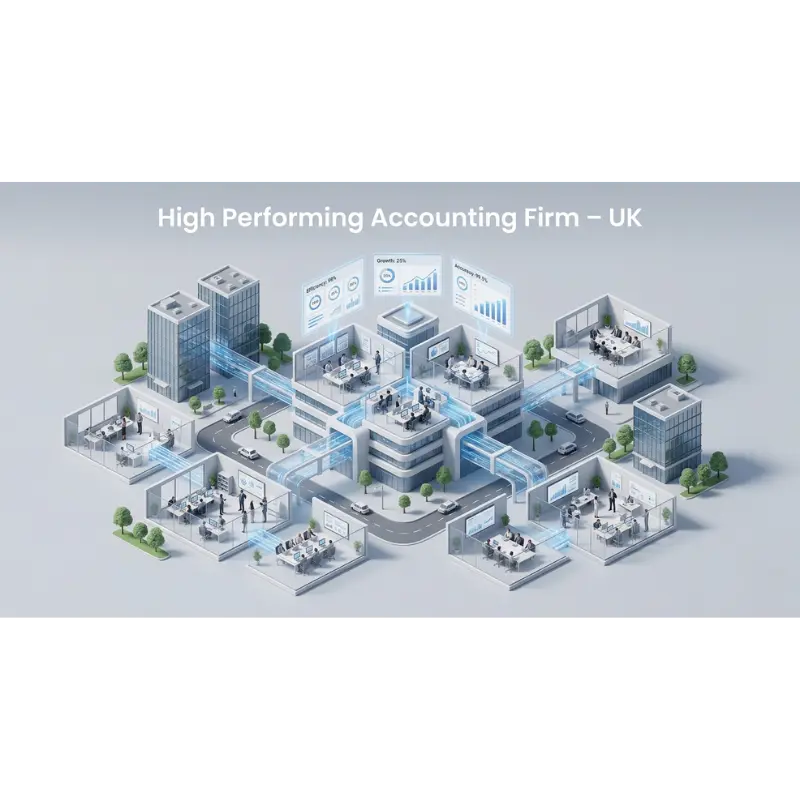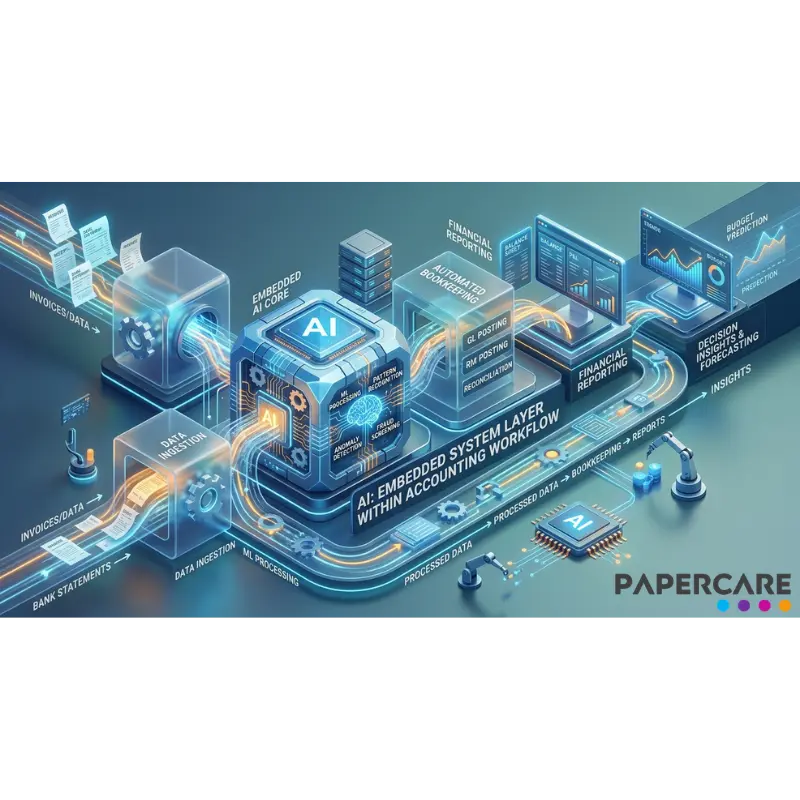


Accounting firms across the UK are experiencing a major shift in how audit documentation and financial working papers are managed. Traditional spreadsheet-based workflows, once considered sufficient, are increasingly proving inefficient, difficult to manage, and prone to human error.
As firms grow and compliance requirements become more demanding, many accounting professionals are now exploring working papers software as a more efficient and reliable alternative.
But what exactly is working papers software, and why are modern accounting firms adopting it?
This guide explains everything UK accountants need to know about working papers software, including how it works, its benefits, and why AI-powered solutions are becoming the future of audit documentation.
What Are Working Papers in Accounting?
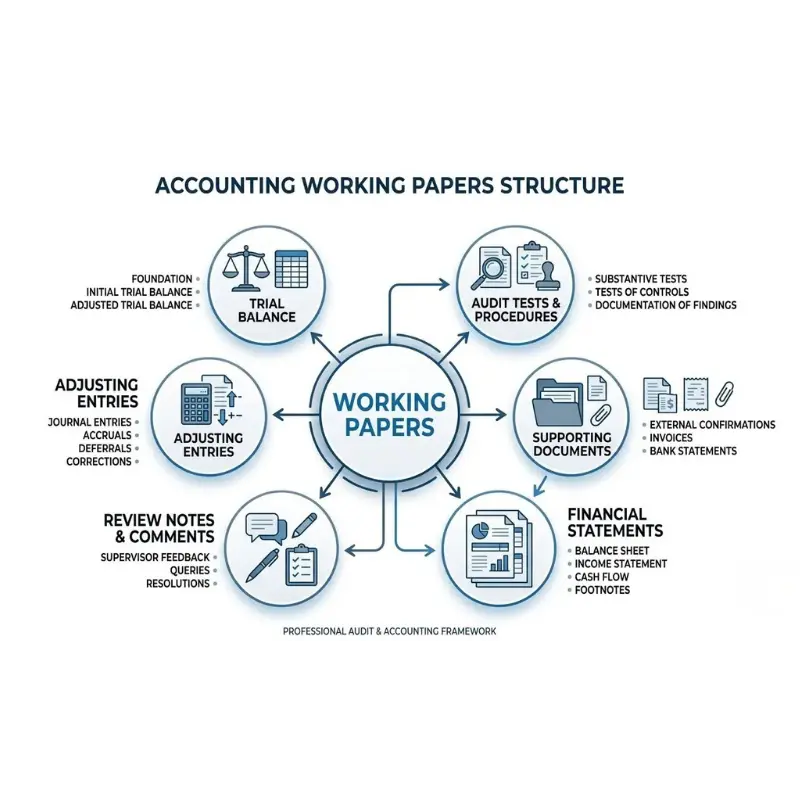
Working papers are the supporting documents and records that accountants and auditors prepare during an engagement. These documents form the foundation of financial analysis, audit procedures, and final reporting.
Working papers typically include:
- Financial statements and trial balances
- Supporting schedules and reconciliations
- Audit tests and verification records
- Adjusting journal entries
- Notes, explanations, and review comments
These documents serve several important purposes:
- Supporting conclusions in financial reports
- Demonstrating compliance with audit standards
- Documenting the audit trail for regulatory reviews
- Ensuring transparency and accountability
Historically, most firms managed these documents using Excel spreadsheets, shared folders, and manual documentation processes.
However, as accounting workflows become more complex, these traditional methods often create inefficiencies.
What is Working Papers Software?
Working papers software is a specialised digital platform designed to help accounting firms prepare, organise, review, and manage working papers more efficiently.
Instead of relying on disconnected spreadsheets and manual documentation, working papers software provides a centralised system where all engagement documentation is structured, organised, and securely stored.
Modern working papers platforms typically offer:
- Structured working paper templates
- Automated calculations and validation checks
- Cloud-based collaboration for accounting teams
- Version control and review workflows
- Secure documentation storage
- Audit-ready file organisation
The goal is simple: make the preparation and review of working papers faster, more accurate, and easier to manage.
Why Traditional Spreadsheet-Based Workflows Create Problems
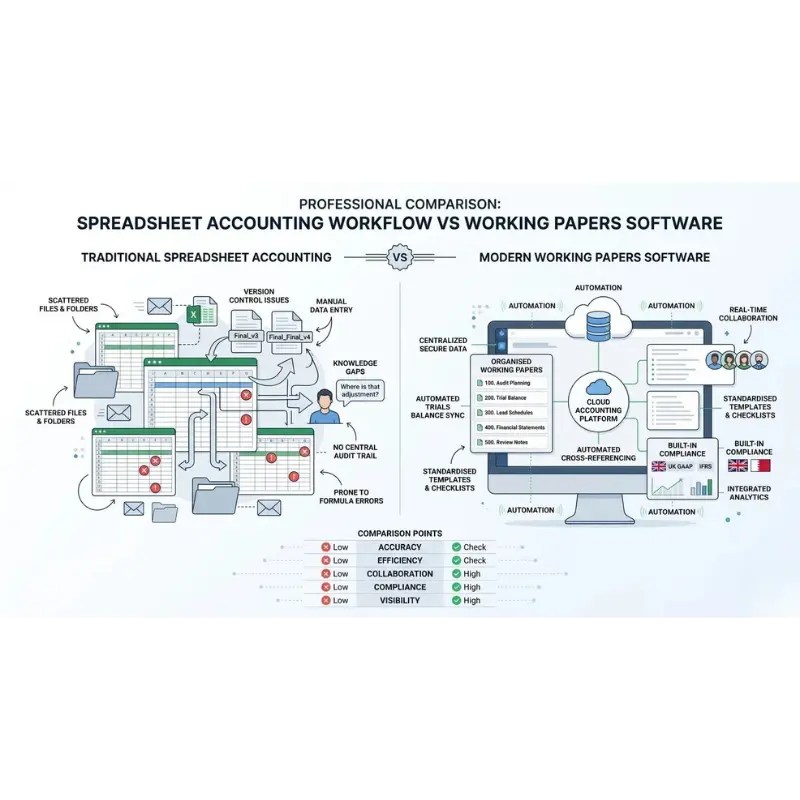
Many accounting firms still rely heavily on spreadsheets for managing working papers. While spreadsheets offer flexibility, they often introduce several challenges when used at scale.
- High Risk of Errors: Manual spreadsheets are prone to formula errors, broken links, and incorrect data inputs. Even small mistakes can lead to major inconsistencies in financial documentation.
- Difficult Review Processes: Reviewing spreadsheet-based working papers can be time-consuming. Partners and managers often need to manually verify formulas, cross-check references, and leave comments across multiple files.
- Version Control Issues: When multiple team members work on different versions of spreadsheets, it becomes difficult to track changes and maintain a single source of truth.
- Limited Collaboration: Traditional file-sharing systems make it harder for teams to collaborate efficiently, especially when working remotely.
- Poor Documentation Structure: Spreadsheets do not always provide a consistent structure for working papers, which can make documentation harder to review and audit.
These limitations are one of the main reasons why firms are increasingly moving towards dedicated working papers software solutions.
Key Features of Modern Working Papers Software
Modern working papers software is designed to address the inefficiencies of traditional documentation processes.
Here are some of the most important features accounting firms should look for.
Automated Creation of Working Papers
Instead of building documentation manually from scratch, working papers software automatically structures engagement files.
This ensures consistency across engagements and saves time during preparation.
AI-Based Accuracy Checks
Advanced systems now use artificial intelligence to detect inconsistencies, missing information, or calculation errors in working papers.
These automated checks help improve accuracy and reduce the risk of oversight during the review process.
Cloud-Based Collaboration
Cloud working papers software allows accounting teams to collaborate in real time.
Team members can work simultaneously on the same engagement while maintaining complete visibility over updates and changes.
Role-Based Access Control
Accounting firms can assign different levels of access based on roles.
For example:
- Staff accountants can prepare documentation
- Managers can review files
- Partners can approve final deliverables
This improves workflow structure and accountability.
Centralised Documentation Storage
All engagement documents are stored in a single secure location, making it easier to access files during audits, reviews, or regulatory checks.
Version Control and Audit Trails
Working papers software maintains a complete history of changes, ensuring firms always know who updated a document and when.
This feature is particularly useful during external audits and compliance reviews.
How AI is Transforming Working Papers Software
One of the most significant advancements in accounting technology is the integration of artificial intelligence into working papers systems.
AI-powered platforms go beyond simple document storage. They actively assist accountants throughout the preparation and review process.
AI can help with:
- Automatically structuring working papers
- Identifying inconsistencies in financial data
- Highlighting missing documentation
- Suggesting corrections or adjustments
- Improving review efficiency
This dramatically reduces the manual workload for accounting teams while improving overall accuracy.
AI-driven solutions allow firms to focus more on professional judgement and client advisory work, rather than repetitive administrative tasks.
Benefits of Working Papers Software for UK Accounting Firms
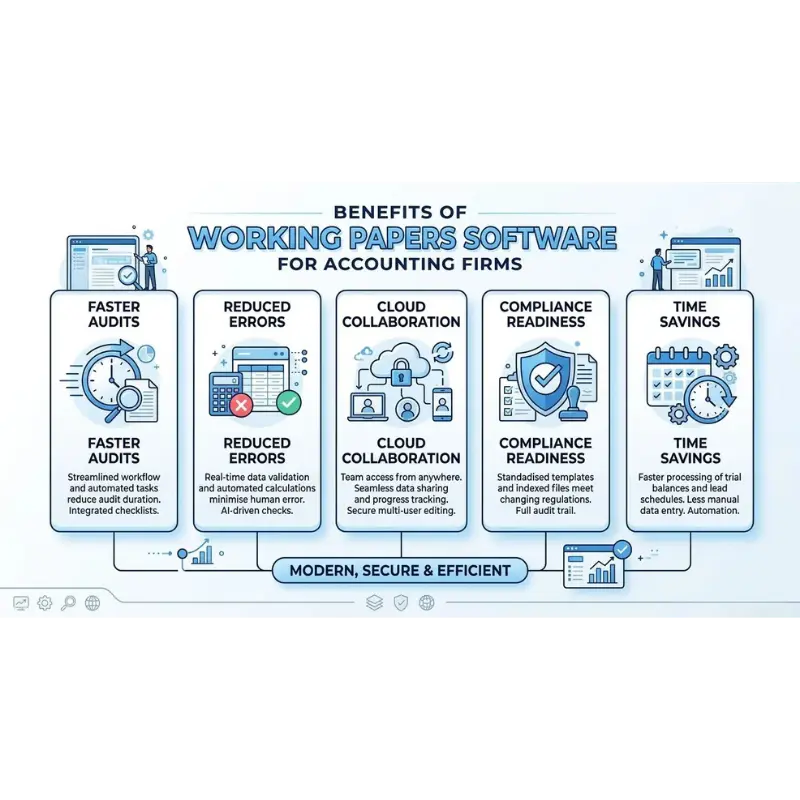
Adopting working papers software can significantly improve operational efficiency within accounting firms.
Here are some of the most notable benefits.
Increased Efficiency
Automated documentation and structured workflows reduce the time spent preparing working papers.
This allows teams to complete engagements faster without compromising quality.
Improved Accuracy
Built-in validation checks help prevent errors before they reach the final review stage.
This reduces rework and improves overall documentation reliability.
Better Collaboration
Cloud-based systems allow multiple team members to work together seamlessly, even when operating remotely.
Stronger Compliance
Structured documentation makes it easier for firms to demonstrate compliance with audit and accounting standards.
Scalable Workflows
As firms grow and take on more clients, working papers software ensures documentation processes remain organised and consistent.
Choosing the Right Working Papers Software
Not all working papers systems are created equal. When selecting a platform, accounting firms should consider several factors.
Ease of Use
The system should be intuitive enough for teams to adopt quickly without extensive training.
Automation Capabilities
Look for solutions that reduce manual documentation work through automation and AI-powered assistance.
Cloud Accessibility
Cloud-based platforms provide flexibility and allow teams to work from anywhere.
Security and Compliance
Financial documentation must be stored securely with proper access controls.
Scalability
The system should support firms as they expand their client base and engagement complexity.
The Future of Working Papers for Accounting Firms
The accounting profession is evolving rapidly. Firms are increasingly adopting digital tools that streamline workflows, improve accuracy, and enhance collaboration.
Working papers software represents a major step forward in modernising audit and accounting documentation.
As artificial intelligence continues to develop, the role of working papers platforms will expand even further.
Future systems will not only manage documentation but also assist accountants in analysing data, identifying risks, and improving decision-making.
How Papercare Working Papers Helps Accounting Firms Modernise Their Workflow
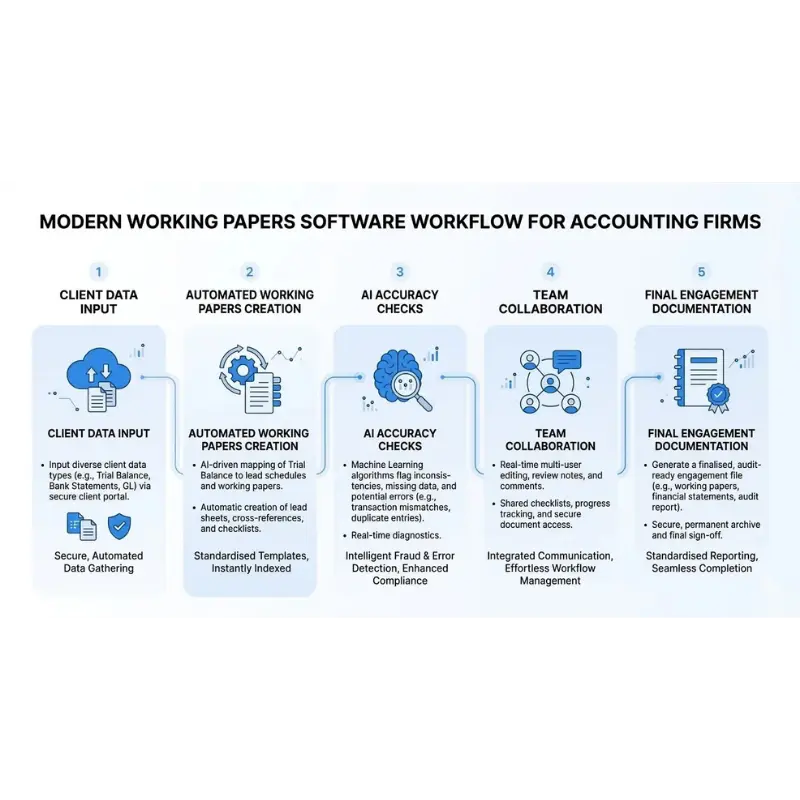
Papercare Working Papers is designed specifically for modern accounting professionals who want to move beyond spreadsheet-based documentation.
Papercare is an AI-powered, cloud-based working papers software built to streamline the preparation, review, and management of engagement documentation.
The platform replaces manual workflows with an intelligent system that ensures working papers are organised, accurate, and audit-ready.
With Papercare, accounting firms can:
- Automatically create structured working papers
- Use AI-powered checks to identify errors and inconsistencies
- Collaborate securely with team members in real time
- Maintain complete version control and documentation history
- Store engagement files in a centralised, cloud-based workspace
By automating much of the manual documentation process, Papercare allows accounting professionals to focus more on delivering value to clients rather than managing spreadsheets.
Final Thoughts
Working papers are a fundamental part of accounting and audit engagements, but the way firms manage them is rapidly changing.
Traditional spreadsheet workflows often create inefficiencies, errors, and collaboration challenges that slow down accounting teams.
Working papers software provides a smarter, more structured approach to documentation—helping firms improve efficiency, accuracy, and compliance.
As technology continues to advance, AI-powered platforms are becoming the new standard for managing engagement documentation.
If your firm is still relying on spreadsheets to manage working papers, it may be time to explore a more efficient approach.
Discover how Papercare Working Papers can help your accounting team streamline documentation, improve accuracy, and modernise your workflow.
Visit www.papercare.ai to learn more.