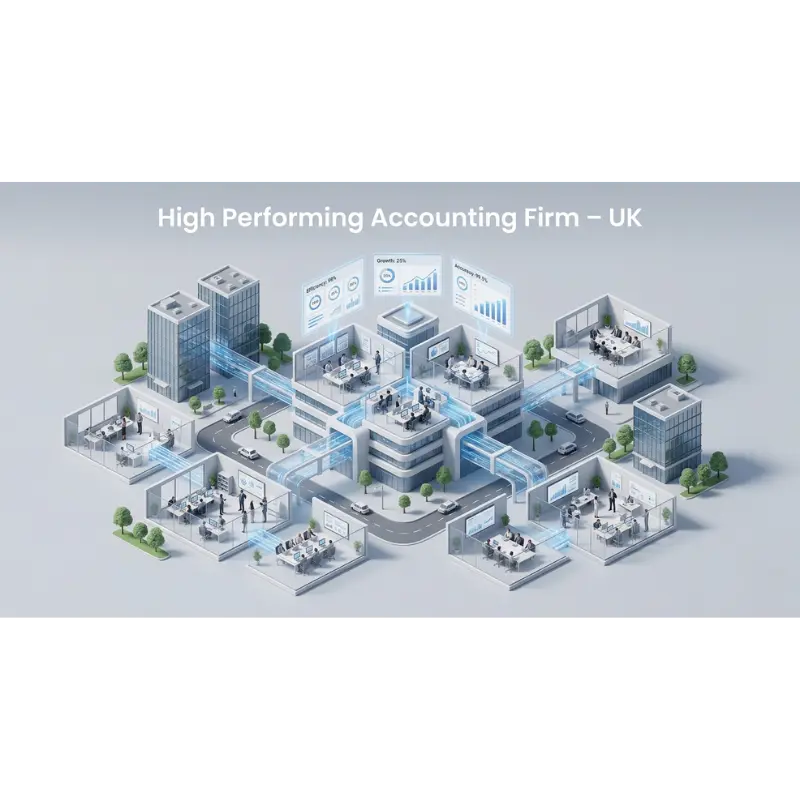


The accounting profession is undergoing a significant transformation. For decades, many accounting firms relied heavily on manual processes, spreadsheets, and time-consuming administrative tasks to manage client engagements.
However, the rapid advancement of technology particularly artificial intelligence, cloud platforms, and workflow automation is fundamentally reshaping how accounting firms operate.
Automation is no longer a luxury reserved for large firms. It is quickly becoming an essential component of modern accounting operations, helping firms increase efficiency, reduce errors, and deliver better services to clients.
For UK accounting firms facing growing regulatory demands, increasing client expectations, and a competitive market, automation is now a strategic necessity rather than an optional improvement.
This article explores why automation is becoming essential for accounting firms and how it is transforming the future of the profession.
The Growing Pressure on Accounting Firms
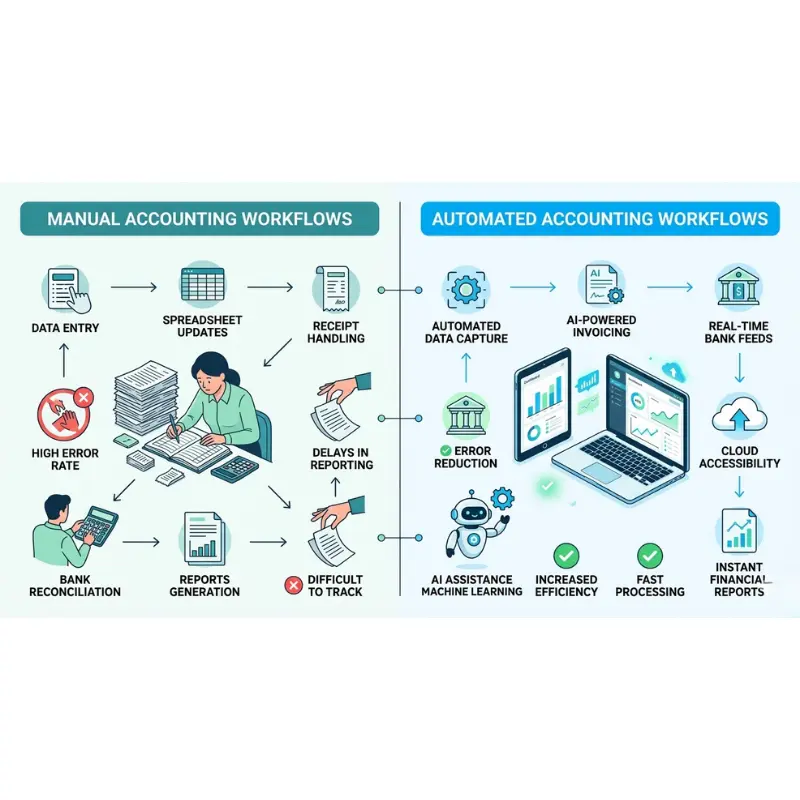
Accounting firms today operate in a far more complex environment than they did a decade ago.
Several factors are driving the need for greater efficiency and smarter workflows.
Increasing Compliance Requirements
Regulatory frameworks such as Making Tax Digital and evolving audit standards require firms to maintain accurate, structured, and well-documented financial records.
Manual processes make it harder to maintain compliance at scale.
Rising Client Expectations
Clients increasingly expect faster turnaround times, real-time insights, and seamless digital collaboration with their accountants.
According to industry research, 82% of accountants report that client expectations have increased significantly in recent years, particularly regarding digital services and responsiveness.
Growing Workloads
Many accounting firms continue to experience increasing workloads without a proportional increase in staff capacity.
Workflow inefficiencies remain one of the biggest operational challenges for firms, especially when tasks are managed through spreadsheets and manual processes.
Automation offers a practical way for firms to address these pressures while maintaining quality and efficiency.
What is Automation in Accounting?
Automation in accounting refers to the use of technology to perform repetitive and rule-based tasks that were traditionally completed manually.
Instead of manually entering data, reconciling accounts, or organising documents, automated systems can handle these tasks quickly and accurately.
Examples of automated accounting processes include:
- Data entry and transaction categorisation
- Invoice processing and reconciliation
- Financial reporting
- Payroll processing
- Audit documentation preparation
- Workflow management and task assignments
By automating routine tasks, accounting teams can reduce manual effort and focus on higher-value activities such as analysis, advisory services, and client relationships.
The Key Benefits of Automation for Accounting Firms
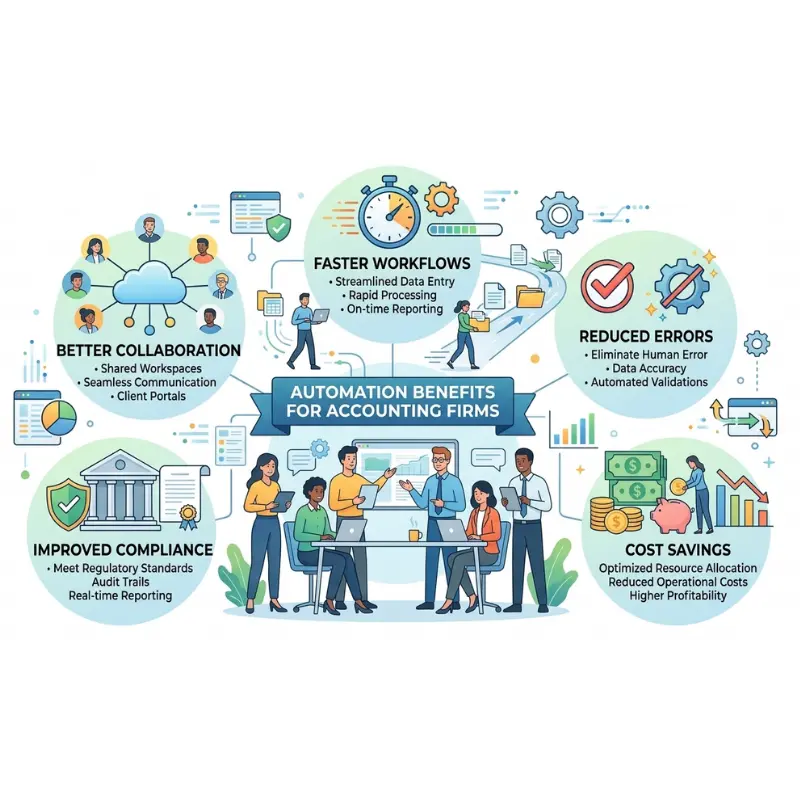
Automation delivers a range of operational and strategic benefits for accounting practices.
- Increased Efficiency and Productivity
One of the most immediate benefits of automation is improved productivity.
Routine accounting tasks such as data entry, reconciliations, and report preparation can consume a significant portion of an accountant’s time.
Automation tools streamline these tasks and complete them in a fraction of the time.
Studies show that many accounting firms report significant improvements in productivity after implementing automated workflows.
In some cases, firms have also experienced noticeable cost reductions due to improved operational efficiency.
- Reduced Human Error
Manual data entry and spreadsheet-based workflows are inherently prone to errors.
Formula mistakes, duplicated entries, and broken references can create inconsistencies that affect financial reporting and audits.
Automation helps reduce these risks by:
- Standardising processes
- Validating data automatically
- Flagging inconsistencies
This results in more accurate financial information and greater confidence in reporting outcomes.
- Better Workflow Management
Managing multiple clients, engagements, and deadlines can become difficult when workflows are handled manually.
Automation platforms allow firms to:
- Assign tasks automatically
- Track progress across engagements
- Set reminders and deadlines
- Maintain visibility across teams
Research shows that workflow automation significantly reduces time spent on administrative scheduling and task management.
This allows accounting teams to focus more on professional work rather than operational coordination.
- Improved Collaboration Across Teams
Modern accounting work is increasingly collaborative.
Teams often work across different offices or remotely, requiring real-time access to documents and client data.
Cloud-based automation platforms enable team members to:
- Access files securely from anywhere
- Work simultaneously on shared documents
- Track changes through version history
- Communicate within the workflow system
These features significantly improve coordination across accounting teams.
- Scalability for Growing Firms
As accounting firms grow, manual processes become increasingly difficult to manage.
Automation allows firms to scale their operations without needing to increase staff proportionally.
For example:
Automated systems can process large volumes of transactions, generate reports quickly, and maintain consistent documentation structures across engagements.
This scalability is essential for firms that are expanding their client base.
- More Time for Advisory Services
One of the most important changes in the accounting profession is the shift from compliance work to advisory services.
With routine tasks automated, accountants can spend more time:
- Analysing financial data
- Advising clients on strategic decisions
- Supporting business growth
Industry research shows that many accounting firms are already expanding advisory services as automation streamlines compliance work.
This shift allows accountants to deliver greater value to their clients.
Areas Where Automation Has the Greatest Impact
Automation can improve several core accounting workflows.
Bookkeeping and Data Processing
Modern automation tools can categorise transactions, capture invoice data, and reconcile accounts automatically.
These systems can handle large volumes of financial data with minimal manual input.
Financial Reporting
Automated reporting systems generate financial statements and management reports based on real-time data.
This reduces the time required to prepare month-end or year-end reports.
Payroll Processing
Payroll automation reduces manual calculations, ensures compliance with regulations, and simplifies employee payment management.
Audit and Assurance Workflows
Automation is increasingly used to support audit preparation and documentation.
Automated tools can help accountants organise engagement files, verify data consistency, and streamline the review process.
The Role of Artificial Intelligence in Accounting Automation

Automation in accounting is evolving rapidly due to the integration of artificial intelligence.
AI enables systems to go beyond basic rule-based automation by analysing patterns, identifying anomalies, and providing intelligent insights.
AI-powered accounting tools can:
- Detect unusual transactions
- Identify data inconsistencies
- Analyse financial trends
- Assist with forecasting and risk assessment
In fact, many accountants now use AI tools regularly in their daily workflows, demonstrating how deeply automation has become embedded in the profession.
As AI technology continues to evolve, automation will play an even larger role in accounting operations.
Overcoming Common Concerns About Automation
Despite its benefits, some firms remain hesitant to adopt automation.
Common concerns include:
Implementation Costs
Although automation tools require an initial investment, many firms quickly recover costs through improved efficiency and reduced manual workload.
Data Security
Modern accounting platforms implement strong security measures such as encryption, role-based access, and secure cloud storage.
Staff Training
Adopting automation often requires training staff to use new tools effectively.
However, many systems are designed to be user-friendly and easy to integrate into existing workflows.
With proper implementation and training, these challenges can be managed effectively.
Automation is Reshaping the Future of Accounting
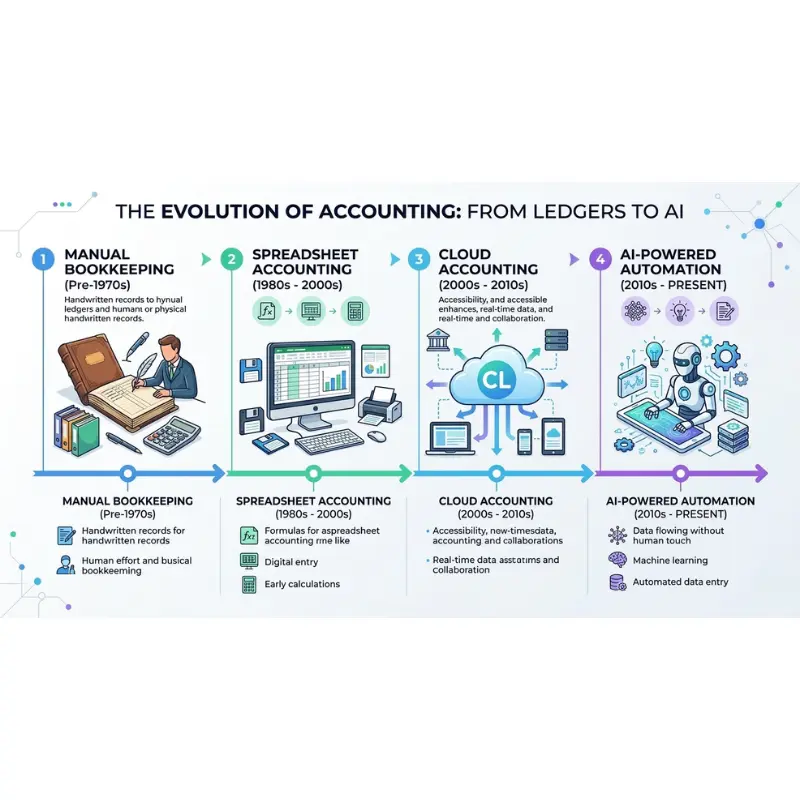
The accounting profession is moving rapidly towards a more technology-driven future.
Automation is enabling firms to operate more efficiently, deliver higher-quality services, and respond more effectively to client needs.
Rather than replacing accountants, automation is transforming the role of accounting professionals.
Accountants are increasingly becoming strategic advisors who interpret financial data, provide insights, and support business decision-making.
This shift represents a significant opportunity for firms that embrace modern technologies.
How Automation Supports Modern Working Papers and Audit Documentation
One of the areas where automation is having a major impact is the preparation and management of working papers.
Traditionally, working papers were prepared manually using spreadsheets and disconnected documents. This often-created inefficiencies, version control problems, and time-consuming review processes.
Modern accounting platforms now automate many aspects of working paper preparation, including:
- Structuring engagement documentation
- Validating financial data
- Organising supporting documents
- Streamlining review workflows
Automation ensures that working papers remain accurate, consistent, and audit-ready.
As accounting firms adopt more advanced technology, automated working papers systems are becoming an essential component of efficient audit workflows.
Final Thoughts
Automation is no longer a future concept in accounting it is already transforming how firms operate.
By automating repetitive tasks and streamlining workflows, accounting firms can improve efficiency, reduce errors, and deliver better outcomes for clients.
For firms looking to remain competitive in an increasingly digital profession, embracing automation is not simply about adopting new technology. It is about creating smarter processes that allow accounting professionals to focus on high-value work.
As the profession continues to evolve, firms that successfully integrate automation into their workflows will be better positioned to adapt, grow, and deliver greater value to their clients.